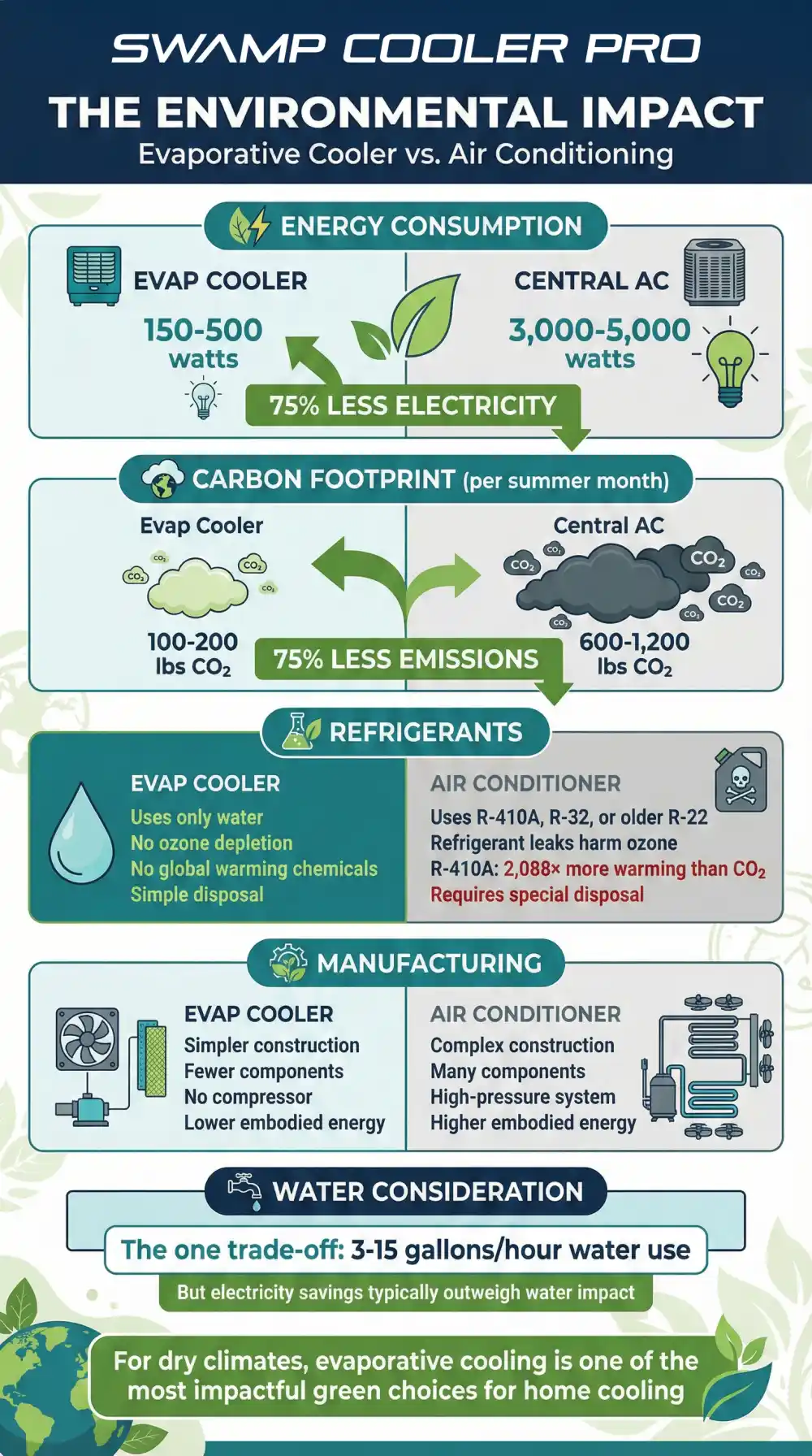
In most cases, yes—evaporative cooling has a significantly smaller environmental footprint than air conditioning. Here's a detailed comparison:
Energy consumption:
Evaporative coolers use approximately 75% less electricity than comparable air conditioning systems. This translates directly to:
- Lower carbon emissions from power generation
- Reduced strain on the electrical grid
- Less fossil fuel consumption
- Smaller overall carbon footprint
Refrigerants:
Air conditioners:
- Use chemical refrigerants (R-410A, R-32, older R-22)
- Refrigerant leaks contribute to ozone depletion and global warming
- R-410A has a global warming potential (GWP) 2,088× greater than CO2
- Proper disposal required at end of life
Evaporative coolers:
- Use only water—no refrigerants
- No ozone depletion potential
- No global warming potential from refrigerants
- Simple disposal at end of life
Manufacturing impact:
Evaporative coolers have:
- Simpler construction
- Fewer manufactured components
- No compressor or complex refrigerant system
- Lower embodied energy in materials
Water usage consideration:
The one environmental trade-off is water consumption:
- Evap coolers use 3-15 gallons per hour
- In water-scarce desert regions, this is a valid concern
- However, much of this water evaporates into the atmosphere (natural water cycle)
- Power plants that generate electricity for AC also use significant water
Carbon footprint comparison:
Running a central AC for one summer month produces approximately:
- 600-1,200 lbs of CO2 (depending on local grid)
Running an evaporative cooler for one summer month produces:
- 100-200 lbs of CO2
The bottom line:
For appropriate climates, evaporative cooling is substantially more environmentally friendly:
- 75% less electricity = 75% less power plant emissions
- No harmful refrigerants
- Simpler manufacturing
- The water usage trade-off is generally favorable compared to electricity impact
If you live in a dry climate where evaporative cooling is effective, choosing it over AC is one of the most impactful environmental choices you can make for home cooling.