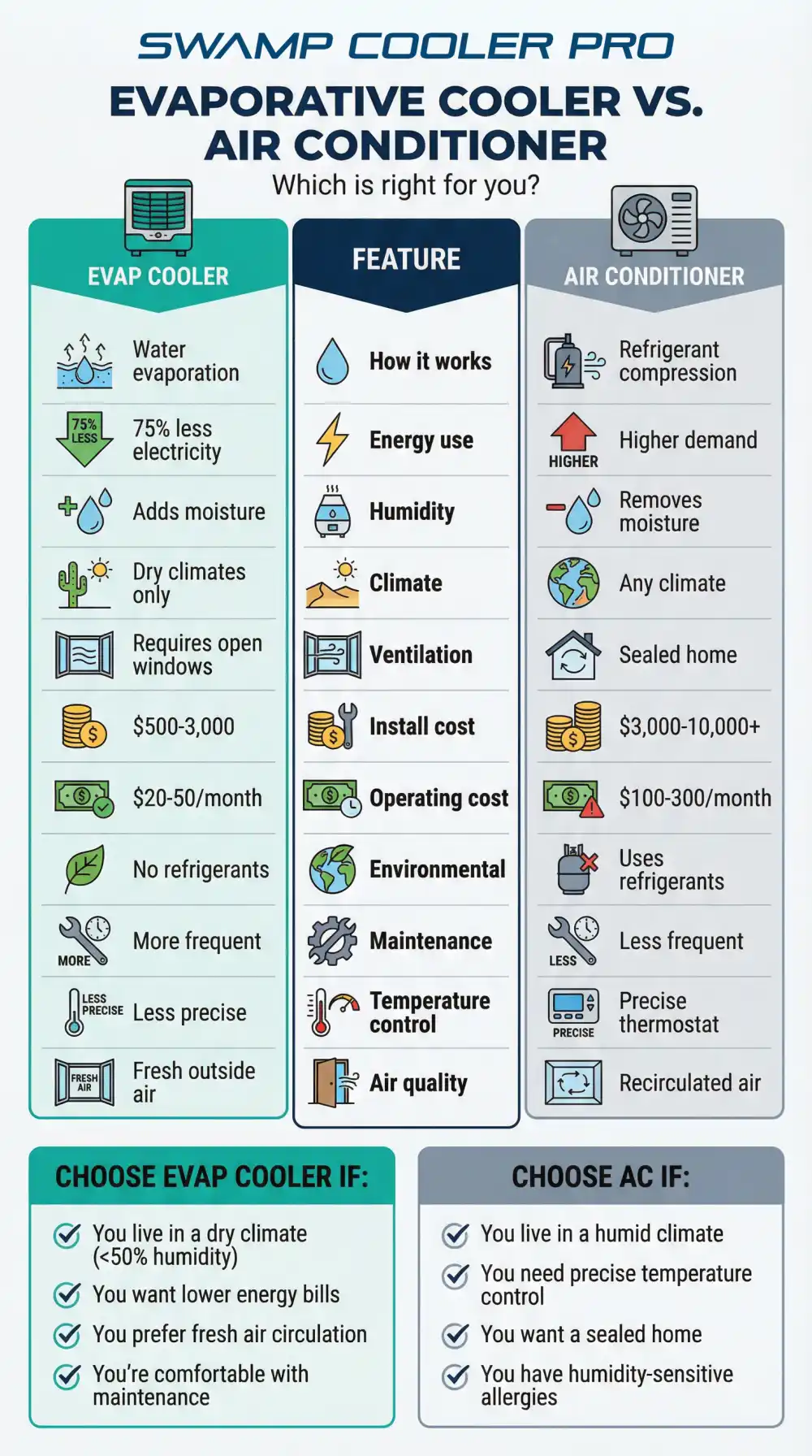
Evaporative coolers and air conditioners use fundamentally different technologies to cool air. Understanding these differences helps you choose the right system.
How they work:
Evaporative Coolers:
- Use water evaporation to cool air
- Hot air passes through wet pads
- Water absorbs heat as it evaporates
- Cooled, humidified air enters your home
Air Conditioners:
- Use refrigerant compression cycle
- Refrigerant absorbs heat and releases it outside
- Dehumidifies air in the process
- Recirculates indoor air
Key differences:
| Feature | Evaporative Cooler | Air Conditioner |
|---|---|---|
| Energy use | 75% less electricity | Higher electricity demand |
| Humidity | Adds moisture | Removes moisture |
| Climate | Dry climates only | Any climate |
| Ventilation | Requires open windows | Sealed home |
| Install cost | $500-3,000 | $3,000-10,000+ |
| Operating cost | $20-50/month | $100-300/month |
| Environmental | No refrigerants, low energy | Uses refrigerants, high energy |
| Maintenance | Frequent (pads, water) | Less frequent |
| Temperature control | Less precise | Precise thermostat |
| Air quality | Fresh outside air | Recirculated air |
Advantages of evaporative cooling:
- Dramatically lower operating costs
- Environmentally friendly
- Adds beneficial humidity in dry climates
- Fresh air circulation
- Simple, repairable technology
- Lower upfront cost
Advantages of air conditioning:
- Works in any climate
- Precise temperature control
- Reduces humidity (good in humid areas)
- Works with sealed homes
- Consistent performance
- Less frequent maintenance
Best use cases:
Choose evaporative cooling if:
- You live in a dry climate (under 50% humidity)
- You want lower energy bills
- You prefer fresh air circulation
- You're comfortable with regular maintenance
Choose air conditioning if:
- You live in a humid climate
- You need precise temperature control
- You want a sealed home
- You have allergies aggravated by added humidity